A dishwasher is supposed to be the cleanest appliance in the kitchen, yet it quietly collects food scraps, grease and mineral film. When the glasses come out cloudy or a sour smell greets you at the door, the machine is usually not broken. It just needs a little attention in the places that trap residue.
Why a Dishwasher Gets Dirty
Every cycle sends food bits through a small filter at the bottom of the tub. Whatever the filter catches stays there until someone removes it, and a clogged filter lets old grease and scraps circulate back over clean dishes. Hard water adds a chalky film, and the rubber seal around the door holds damp debris that never fully dries.
Scraping plates into the trash helps, but there is no need to rinse them under the tap first. Most modern machines work better with a little food on the dishes, so a quick scrape is plenty. The goal is a machine that drains freely, sprays freely and dries between uses.
The Ten-Minute Check Worth Doing Monthly
Check the owner’s manual for where each part sits, because layouts vary. Pull out the bottom rack and work through this short list with the cycle off and the door open:
- Filter. Twist or lift it out, rinse it under warm water, and scrub gently with a soft brush and a drop of dish soap until the mesh is clear.
- Drain area. Wipe the sump under the filter and remove any bits of glass, seeds or labels that have settled there.
- Spray arms. Look for clogged holes and clear them with a toothpick, then spin the arm by hand to confirm it turns freely.
- Door seal. Run a damp cloth with a little dish soap along the rubber gasket and the lower edge of the door, where grime hides.
- Racks and basket. Wipe the tines and the cutlery basket, and set any rust-prone pieces aside to replace.
Run a Deep-Clean Cycle
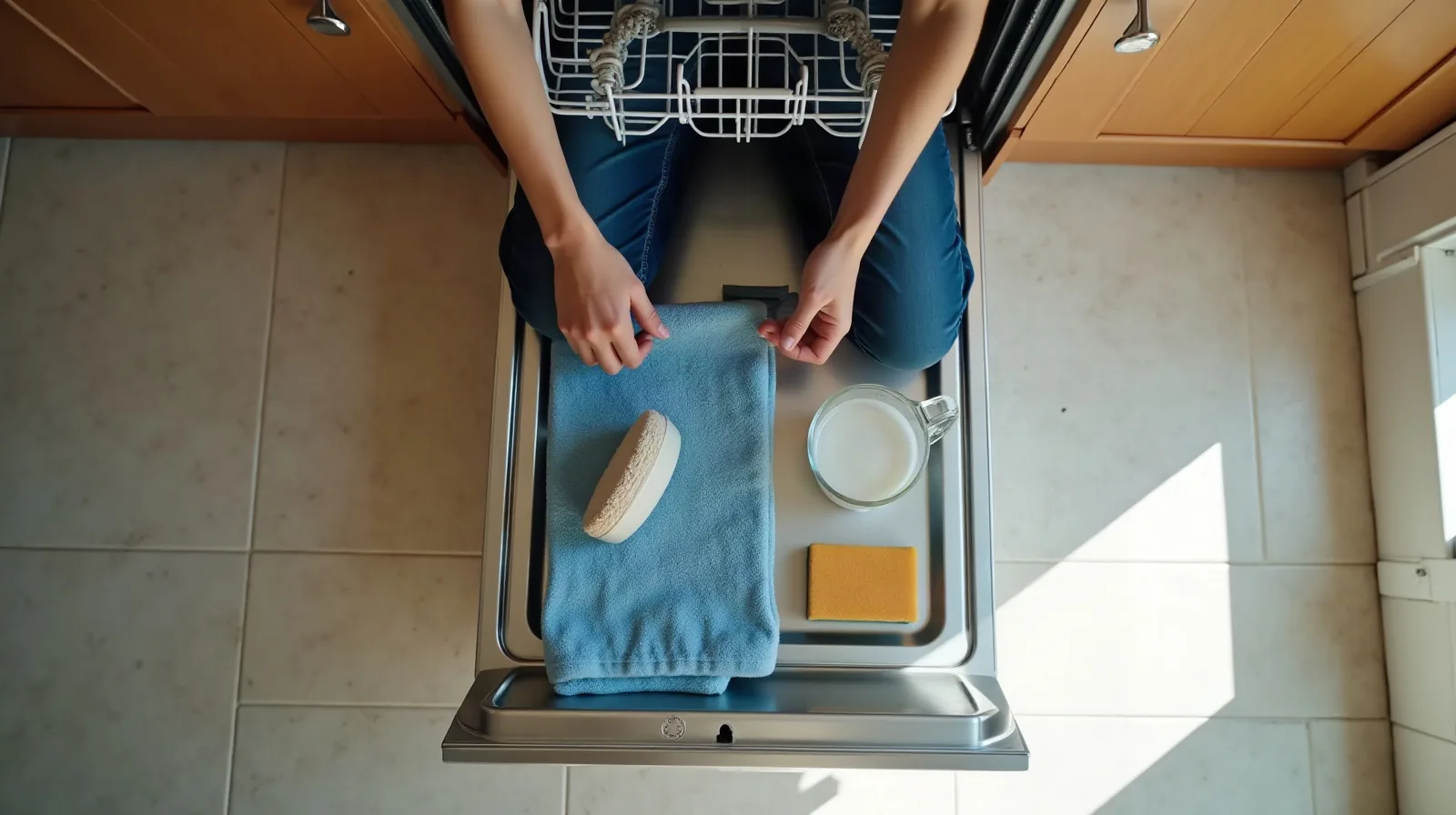
With the parts clean, run the machine empty on its hottest cycle. Many people set a cup of white vinegar upright on the top rack for the first part of the cycle, which helps loosen mineral film. Others sprinkle a cup of baking soda across the bottom for a short second cycle to freshen the tub. Some manufacturers advise against vinegar for certain seals and finishes, so check the manual first, and never mix vinegar with bleach or other cleaners, because the combination can release harmful fumes.
If the tub still shows a stubborn film after one cycle, a dishwasher cleaning tablet made for the job is a simple next step. Follow the directions on the package, and repeat only as often as they suggest.
Habits That Keep It Fresh
A few easy routines mean the deep clean stays rare. Leave the door slightly ajar after a cycle so the tub dries instead of growing a damp smell. Load bowls and cups facing downward and keep the spray arms clear of tall items. Run the kitchen tap until the water is hot before starting a cycle, so the machine begins with hot water. A rinse aid helps hard-water spots, and a water softener can help if the film keeps returning.
If the machine leaks, will not drain after the filter is clean, or throws repeated error codes, stop and call a qualified appliance technician rather than disassembling it. Unplug the unit or switch off its breaker before reaching into any area you cannot see.