Mashed potatoes look like the easiest dish on the table, which is exactly why they go wrong so often. Too much water makes them soupy, undercooking leaves lumps, and overworking turns them into something closer to wallpaper paste. The fix is a handful of small decisions made in the right order.
Start With the Right Potato
Potatoes fall roughly into two camps. Starchy, floury varieties such as russets break down easily and mash up light and fluffy. Waxy varieties such as small red potatoes hold their shape, which tends to make a dense, sticky mash. Yellow-fleshed, all-purpose potatoes sit in the middle and give a naturally creamy, buttery result with a little more body.
For a classic fluffy bowl, choose starchy potatoes; for a richer, creamier texture, choose yellow ones, or use half of each. Plan on about half a pound per person.
Cook Them Gently and All the Way Through
Peel the potatoes if you want a smooth mash, or leave the skins on for a rustic one, then cut them into even chunks about two inches across. Even pieces cook at the same speed. Put them in a pot, cover with cold water by an inch, and add a generous pinch of salt. Starting cold lets the centers cook before the outsides fall apart.
Bring the pot to a boil, then lower it to a steady simmer rather than a hard, rolling boil. Start checking after about fifteen minutes. They are done when a knife slides into the center of the biggest piece with no resistance at all. Slightly underdone potatoes are the main cause of stubborn lumps, so when in doubt, give them a few more minutes.
Drain, Then Dry
This is the step most people skip. Drain the potatoes well, then return them to the empty pot over low heat for a minute or two, shaking the pan gently. Drier potatoes absorb butter and milk instead of turning watery, and the flavor comes through more clearly.
While they dry, warm the milk or cream and the butter together in a small saucepan or in short bursts in the microwave. Cold dairy cools the potatoes down and makes them stiff, and the fat does not blend in as smoothly.
Mash Gently, Never Blend
Every cooked potato is full of tiny cells packed with swollen starch. Gentle pressure separates those cells and keeps them whole, which reads as fluffy. Fast, hard mixing ruptures them, and the released starch turns the whole pot gluey. That is why the tool matters so much:
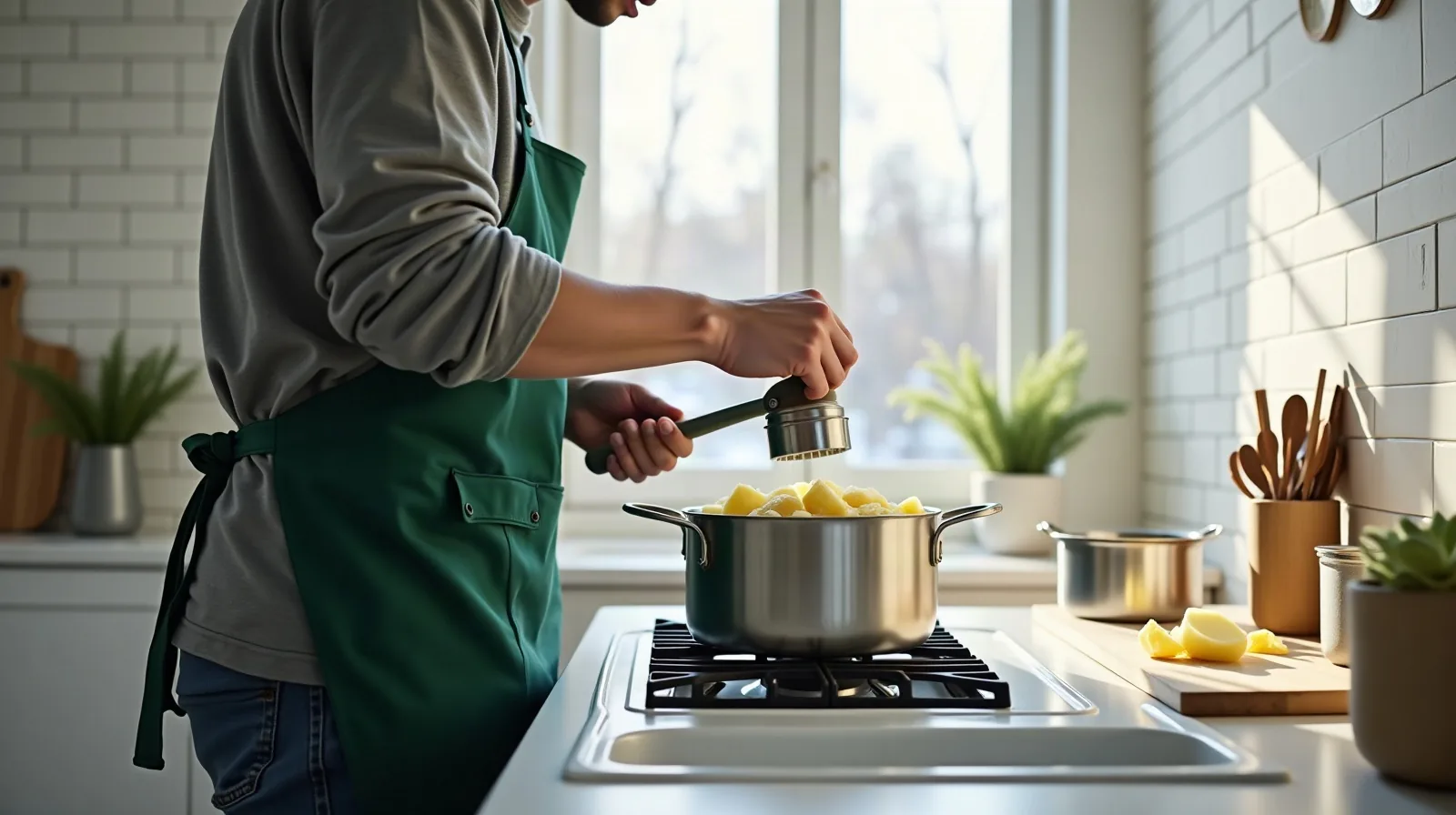
- A ricer or food mill — presses potatoes through small holes for the smoothest, lightest result with almost no effort.
- A hand masher — quick and forgiving; leaves a few soft lumps that many people actually prefer.
- A sturdy fork or whisk — fine for a small batch, as long as the potatoes are fully tender.
- A blender, food processor, or stand mixer on high — skip these for mashing; they overwork the starch in seconds.
Mash the potatoes first, then fold in the warm butter, followed by the warm dairy a splash at a time, stirring with a spatula only until it disappears. Taste and season with salt and pepper at the end, since the cooking water already added some.
Make Them Ahead and Keep Them Warm
Mashed potatoes hold better than their reputation suggests. Make them a few hours early and keep them covered in a heatproof bowl set over a pot of barely simmering water, or in a slow cooker on its warm setting, stirring in a splash of warm milk before serving. Made a day ahead, they reheat well in a covered baking dish in a moderate oven with a little extra butter on top. Leftovers make great potato cakes.