
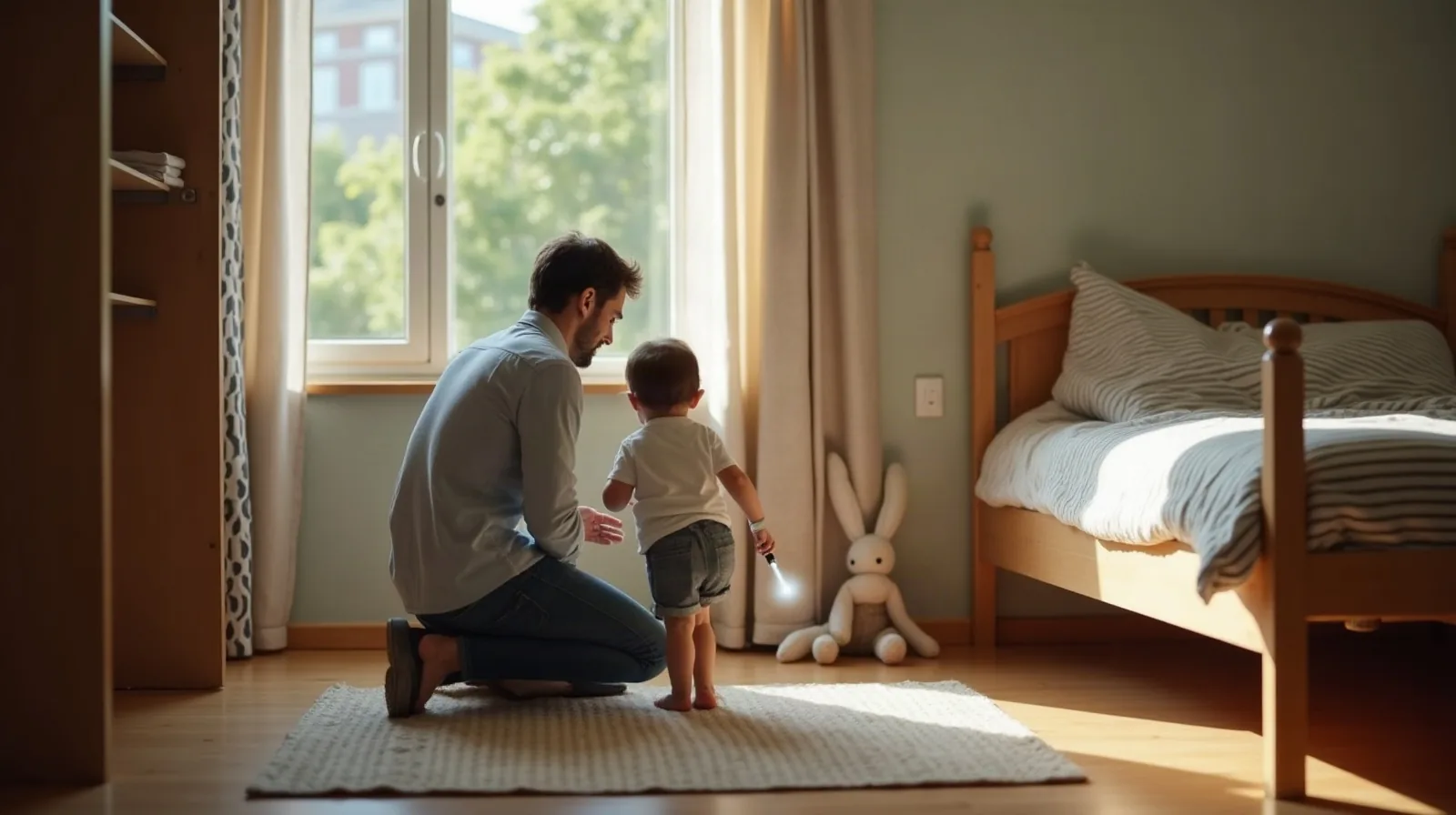
It usually starts around the preschool years: a child who slept happily for months suddenly calls out after lights-out, insists the closet door be shut, or appears in the hallway three times before bedtime. Fear of the dark is one of the most common childhood worries, and it is rarely a sign that anything is wrong. With a calm response and a few small changes, most kids work through it.
Why the Dark Feels So Big
Around ages three to six, imagination grows faster than the ability to sort real from pretend. A coat on a chair becomes a shape, a creak becomes a footstep, and darkness removes the information a child would use to check. Child-development guidance generally treats these fears as a normal stage tied to a growing mind rather than a problem to be corrected. They also tend to flare during changes such as a new bed, a new sibling, starting school, or a scary story, and they often fade on their own as understanding catches up.
Take the Fear Seriously, Then Take Small Steps
Dismissing the fear (“there is nothing there”) can make a child feel unheard, while elaborate monster checks can confirm that there is something to check. A middle path works better: acknowledge the feeling, offer comfort, and then rebuild confidence gradually. Courage grows through repeated, manageable wins, so aim for steps that are only slightly uncomfortable.
- Name it calmly. “The dark feels scary tonight. You are safe, and a grown-up is right down the hall” keeps the tone steady without feeding the story.
- Add a short, predictable goodnight. The same few minutes every night gives the fear less room to grow.
- Use check-ins instead of staying. Promise to return in a few minutes, then do, and stretch the gap over several nights.
- Let the child steer. Choosing the night light, the stuffed animal, or whether the door is open gives back a sense of control.
- Practice in daylight. A game of flashlight hide-and-seek in a dim room turns the dark into something playful.
Make the Room Feel Safe
A few environmental tweaks remove many of the shapes that spark fear. Clear the chair piled with clothes, tuck away toys that cast odd shadows, and walk through the room together at bedtime so the child sees the closet and under-bed spaces for themselves. A dim, soft night light or a hallway light left on is generally fine, and many families find a low, warm glow works better than a bright one. Keep screens and scary stories out of the last hour before bed, since vivid images can follow a child into the dark.
What to Do in the Middle of the Night
When a child wakes frightened, keep the response short, quiet, and boring: a hug, a brief reassurance, and a walk back to bed. Long conversations and lots of light can turn a wake-up into a party, and moving into the parents’ bed every night can make the habit harder to reset later. Occasional nightmares are normal. If the fear lasts for months, grows worse, comes with panic, avoidance of other places, or poor sleep during the day, it is worth mentioning to a pediatrician or a child therapist, who can rule out other causes and suggest next steps.