Gravy tends to get made last, in a rush, with a crowd waiting and a hot roasting pan in the way. That is exactly when lumps and a floury taste show up. The good news is that smooth gravy is less about talent and more about order of operations: cook the thickener first, add warm liquid slowly, and give it a few minutes to simmer.
Why Gravy Turns Lumpy
Lumps happen when dry flour or starch hits hot liquid all at once. The outside of each clump swells into a gel almost instantly, sealing raw powder inside, and no amount of stirring breaks it apart afterward. A floury or pasty taste is a related problem: the flour went in but never cooked long enough to lose its raw edge.
Both fixes come from the same idea. Separate every grain of thickener before it meets the bulk of the liquid, either by coating it in fat or by dissolving it in a little cold liquid first. Then let the gravy bubble gently long enough for the starch to fully thicken and mellow.
The Roux Method, Step by Step
A roux is simply equal parts fat and flour cooked together, and it is the most forgiving route to smooth gravy. For about two cups, use roughly three tablespoons each of fat and all-purpose flour plus two cups of stock. The fat can be pan drippings, butter, or a mix.
Melt the fat in a saucepan over medium heat, whisk in the flour, and keep whisking for two to three minutes until it smells nutty and turns the color of light peanut butter. Because each grain of flour is now coated in fat, it cannot clump. Warm the stock separately, then add it a splash at a time, whisking until each addition is smooth before pouring in more. Once about half is in, the rest can go in faster.
Simmer, Season, and Thin to Taste
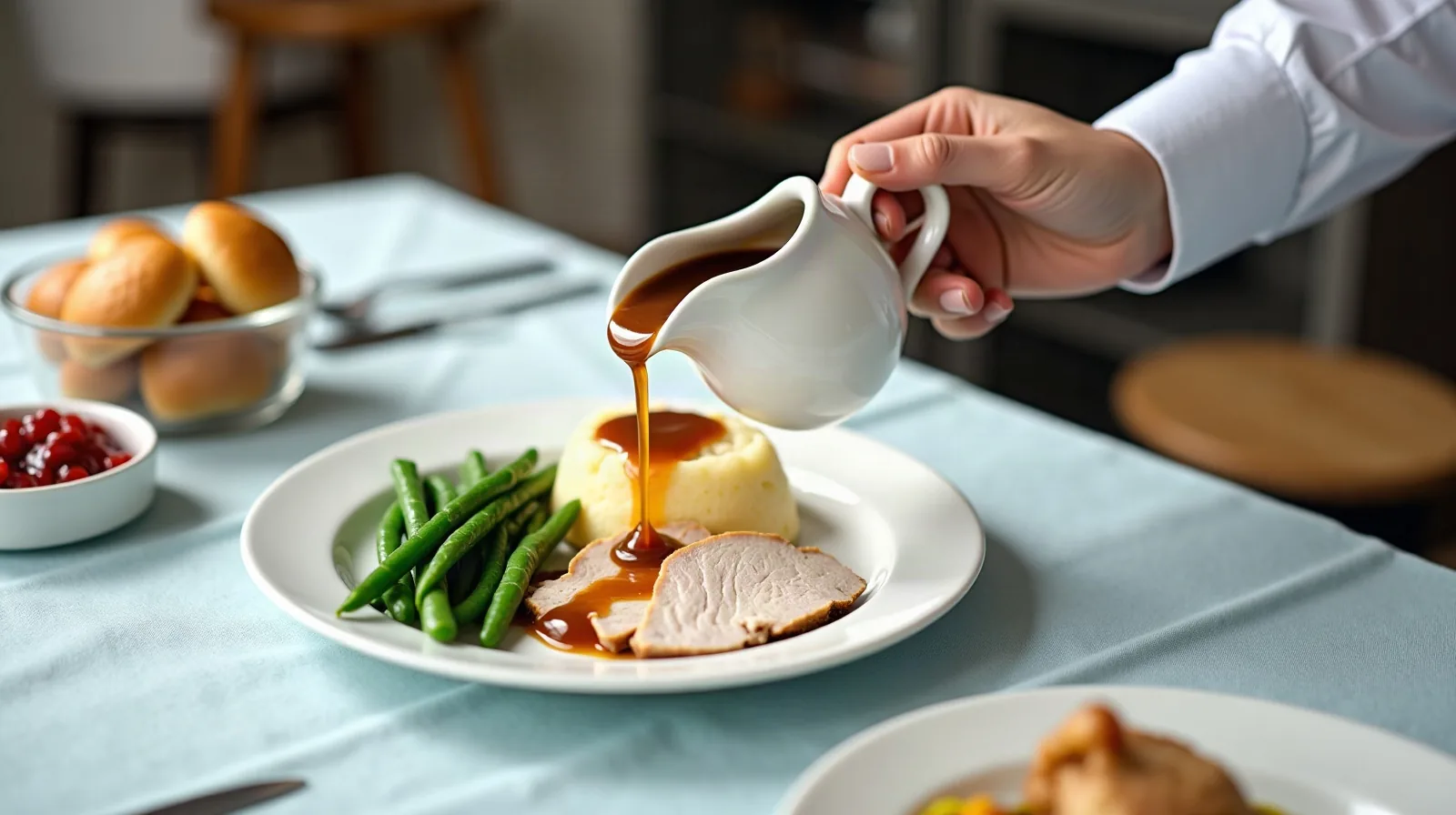
Let the gravy bubble gently for five to ten minutes. This is where it actually thickens and loses any starchy taste, so resist judging the texture in the first minute. It is ready when it coats the back of a spoon and a finger swiped through leaves a clean line. Remember that gravy thickens further as it cools on the table, so stop slightly looser than you want it.
Season at the end, after it has reduced, since stock and drippings can already be salty. A pinch of black pepper, a splash of soy sauce for depth, a little vinegar or lemon to brighten it, or a sprig of thyme simmered in and fished out all go a long way. If it gets too thick, whisk in warm stock a few tablespoons at a time.
Rescue Lumps and Make It Ahead
Even careful cooks end up with the occasional lump, and none of it is a lost cause. A few quick fixes cover most problems:
- A few lumps — pour the gravy through a fine-mesh strainer and press the solids with a spoon.
- Lots of lumps — carefully blend it smooth with a stick blender, keeping the head fully submerged.
- Too thin — whisk a teaspoon of cornstarch into two tablespoons of cold water to make a slurry, stir it into the simmering gravy, and cook a minute or two.
- Greasy on top — tilt the pan and spoon the fat off, or lay a paper towel on the surface for a second.
To skip the last-minute scramble entirely, make a roux gravy with butter and stock a day or two ahead and refrigerate it in a covered container. On the day, reheat it gently over low heat, whisk in a few spoonfuls of the pan drippings for roasted flavor, and thin with stock as needed. Gravy also freezes well for a couple of months; whisk it hard as it warms, since it can look separated until it is hot again.