The dishes are stacked, the couch is calling, and the evening seems to lean toward staying put. A short walk right after eating pushes the other way, and the effort involved is small. Ten or fifteen minutes at an easy pace needs no gear, no plan and no fitness level. Here is what the habit seems to do, how to keep it comfortable, and how to make it survive a busy week.
What a Gentle Walk After Eating Does
After a meal, the body breaks food down into glucose, and blood sugar rises. Working muscles pull glucose out of the bloodstream for fuel, which is why even light movement can soften the rise. Small studies, mostly short-term ones, have generally found that a brief walk after eating leads to a lower blood sugar peak than sitting, and some suggest it may beat a single longer walk taken at another time of day. Many people also feel that walking eases the heavy, full sensation after a big dinner, and it adds to the daily movement that public health guidelines generally point toward. None of this is a cure or a guarantee, and the research is still modest in size, but the habit is low-risk and pleasant for most people.
How Long, How Fast and How Soon
The bar is lower than most people expect. Many studies use somewhere between ten and thirty minutes, and even a few minutes of standing and moving around seems to help a little. Starting within about half an hour of the meal is a common suggestion, since that is when blood sugar tends to climb.
Pace matters in the opposite direction from what people assume. After a large meal, a brisk power walk can leave the stomach unhappy, while an easy stroll rarely does. A useful test is the talk test: if conversation flows without gasping, the pace is right. Some people prefer to wait a little after a very big meal, and that is fine.
Making It Stick on Busy Evenings
The walk is easy; remembering it is the hard part, so attach it to something that already happens. The meal itself is the best anchor, with shoes by the door and the loop decided in advance. A few ways to keep it going:
- Pick a default loop of about ten minutes so there is no deciding each night.
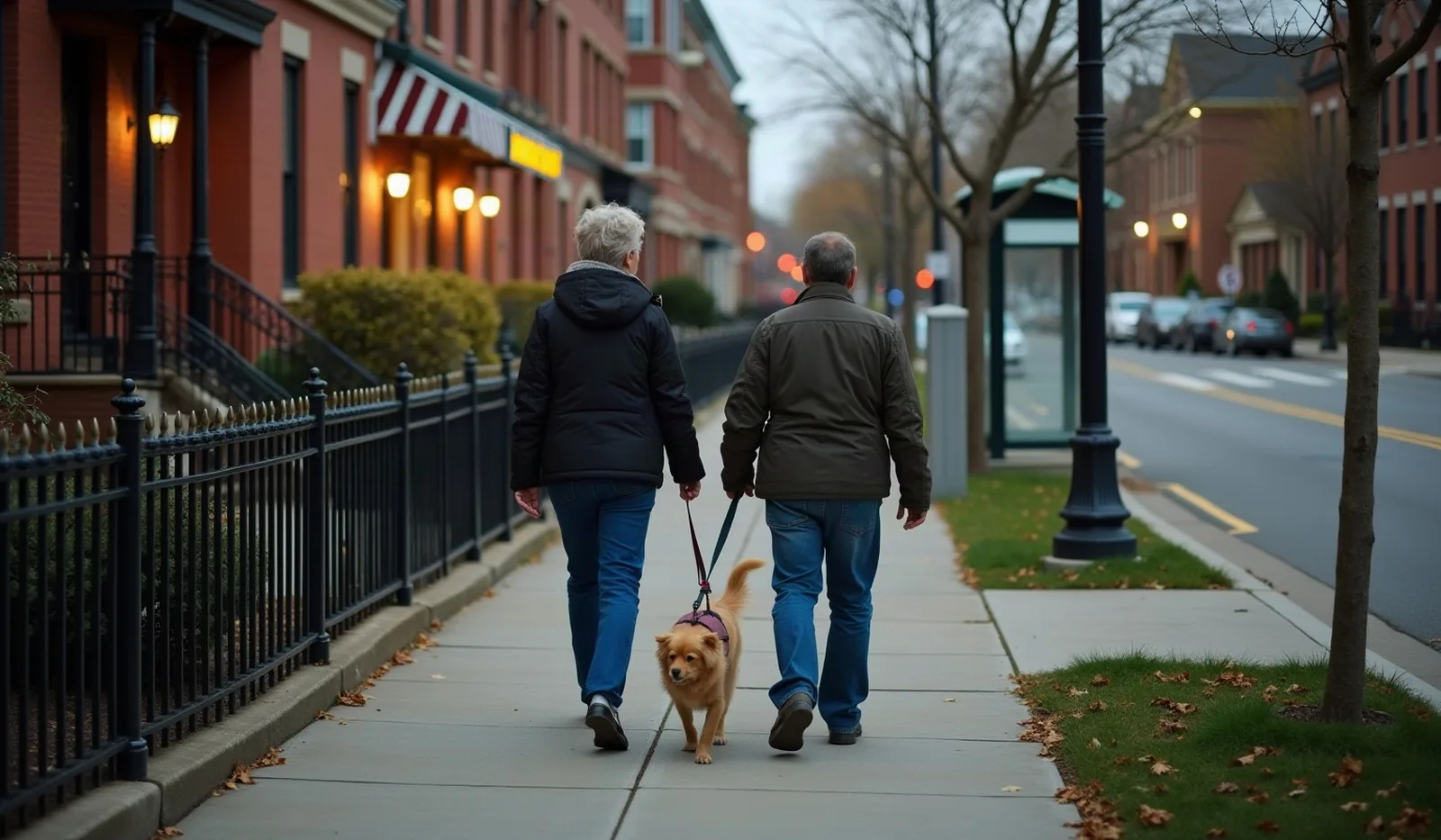
- Take company along, whether a partner, a neighbor or a dog that is already waiting by the leash.
- Pair it with a call to a friend or relative, so the walk doubles as catch-up time.
- Keep a bad-weather plan, such as pacing indoors, tidying or a lap around a building lobby.
- Count lunch too on workdays, since a few minutes outdoors helps with the afternoon slump.
Who Should Check First
For most healthy adults, a slow stroll after eating needs no special preparation. People who manage diabetes, take medication that affects blood sugar, have heart or joint conditions, or are recovering from surgery should talk with their doctor or another qualified professional before changing their routine, since timing and intensity can matter in individual cases. A walk is also not a substitute for medical care or for the broader pattern of meals, sleep and activity that does most of the work. And if walking right after eating brings on dizziness, chest discomfort or unusual pain, stop and get advice.